
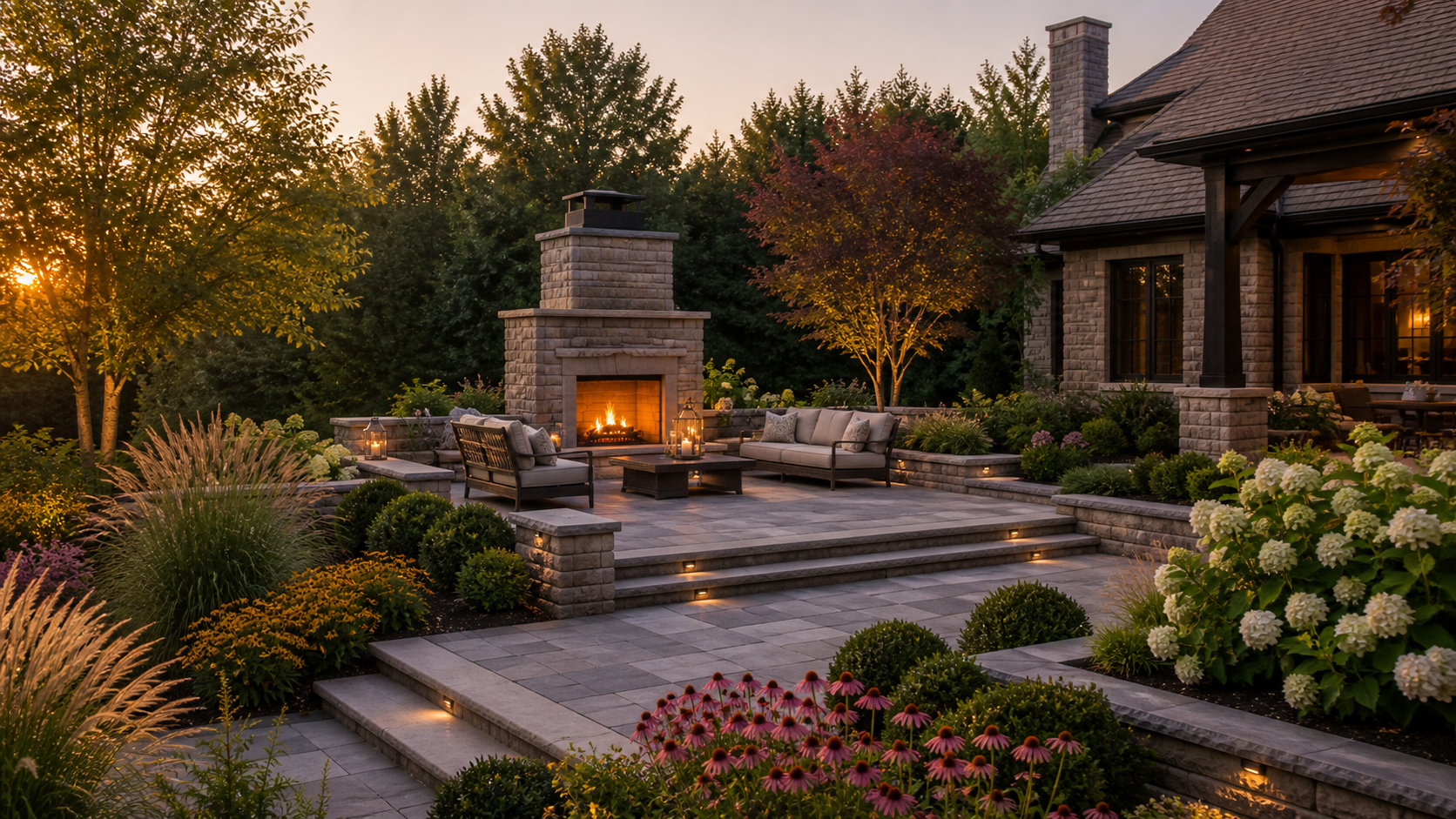
A backyard can photograph beautifully and still sit empty most of the week.
The difference between an impressive outdoor project and a space your family actually lives in often comes down to convenience and comfort.
If the patio is too far from the kitchen, it is harder to use for dinner. If afternoon sun makes the lounge uncomfortable, no one stays there. If the neighbors overlook the seating area, the space may never feel private. If cushions have nowhere to go, setup becomes a chore.
Luxury is not simply having more features. It is eliminating the small reasons people decide to stay inside.
Make the first step outside easy
Outdoor living begins at the door.
The transition should feel comfortable, safe and inviting.
A cramped landing or awkward staircase can make the backyard feel separate. A generous terrace outside the main doors makes the outdoor space feel immediately accessible.
For established properties in Park Hills or Columbia-Tusculum, grade changes can make this especially important.
Put daily-use spaces close to the house
The spaces you use most should usually be convenient.
Dining should have a practical relationship to the indoor kitchen. A grill should not require carrying food across the yard. A small morning coffee area can be close to the door even if the primary lounge sits farther away.
The deeper parts of the yard can hold destinations such as a fire lounge, water feature or garden.
This creates layers of use rather than asking every activity to happen in one place.
Design for sun and shade
Sun exposure can determine whether a space is comfortable.
Track where the sun falls in the morning, afternoon and evening.
A west-facing patio may need substantial afternoon shade. A shaded property in Hyde Park may have the opposite challenge, with planting and hardscape choices shaped by lower light.
Pergolas, pavilions, trees and umbrellas can all be part of the solution.
Make privacy feel natural
People use spaces where they feel comfortable.
Privacy does not require a tall wall around the entire property.
Target specific views with:
- Evergreen planting
- Layered shrubs
- Partial walls
- Screens
- Pergola elements
- Raised planters
A water feature can also mask neighboring sound and make the space feel more secluded.
Plan furniture before finalizing the patio
Furniture should influence patio dimensions.
Measure actual dining tables, sofas, chairs and grills. Then add room for movement.
A patio that looks generous on a plan can feel surprisingly tight once furniture is installed.
High-end design considers the furnished space from the beginning.
Lighting determines whether the space works after dinner
Summer days are long, but many of the best outdoor moments happen after dark.
Lighting should make the yard comfortable without making it feel overlit.
Use warm, selective light to:
- Define steps
- Illuminate pathways
- Highlight trees
- Accent stone
- Support cooking
- Create ambience
D2’s landscape lighting can be planned with the hardscape so wiring and fixtures feel integrated.
Storage is an underrated luxury
Outdoor cushions, grill accessories, toys and maintenance items create clutter quickly.
Built-in storage, outdoor cabinetry and designated utility areas keep the main living spaces visually calm.
This is a small detail that can dramatically improve the day-to-day experience.
Design for more than summer
A fire feature, covered area and thoughtful planting can extend the season well beyond July.
Evergreens keep the landscape structured in winter. Fire creates a reason to use the yard in fall. Covered seating makes a light rain less disruptive.
The more weather conditions the design can handle comfortably, the more value the space provides.
D2’s designer’s take
Ask one question about every feature: Will this make us use the backyard more?
If the answer is no, it may not belong in the plan.
A complete outdoor living design should make everyday life easier, more comfortable and more enjoyable. That is the standard D2 uses when planning substantial landscape design and hardscape projects.
Frequently Asked Questions
Why do some patios not get used?
Common reasons include poor shade, inconvenient access, lack of privacy, uncomfortable furniture layouts and insufficient lighting.
What is the most important feature in an outdoor living space?
There is no universal feature. The most important element is a layout that supports the way the household actually wants to use the space.
Should outdoor furniture be chosen before the patio is built?
Ideally, furniture size and type should be known during design so the patio can be properly proportioned.
How can I use my patio more in spring and fall?
Coverage, fire features, heaters, wind protection and good lighting can extend comfortable use into cooler months.
Does privacy make a backyard more usable?
Often, yes. People are more likely to relax outside when seating areas feel protected from direct neighboring views.
Is a bigger patio always better?
No. An oversized patio can feel empty and increase hardscape without improving the experience. Size should be based on actual use.
Ready to upgrade your outdoor space?
If you want an outdoor space that’s designed for how you live—built with materials that hold up, and finished with details that look right—let’s talk. Schedule your luxury design meeting today – there’s no cost or obligation.