
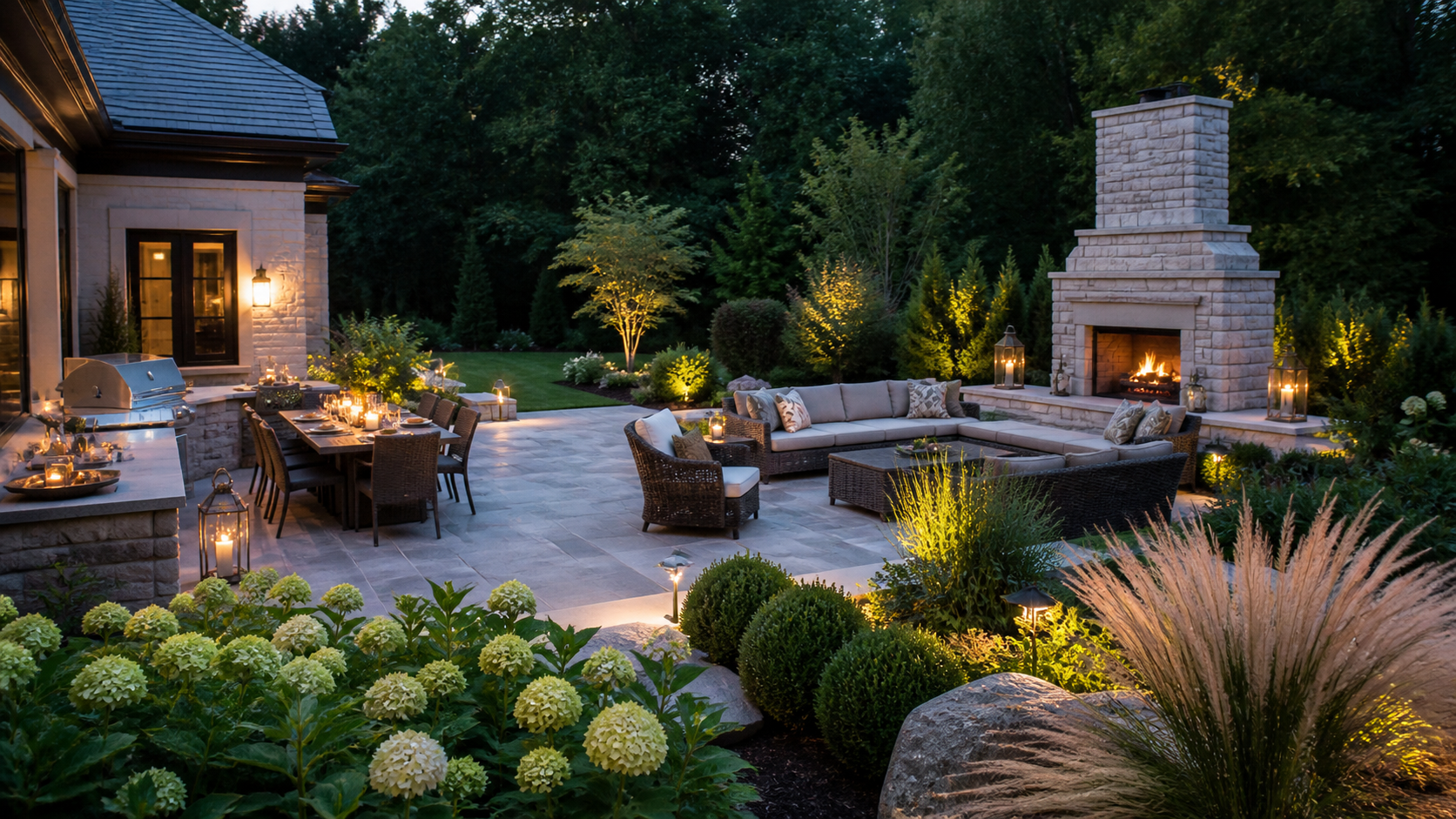
A backyard designed for entertaining should make hosting easier, not simply provide more square footage.
The best entertaining spaces anticipate how people behave. Guests gather near food and drinks. Small groups form around comfortable seating. People move between the house and patio. Children may need open lawn. As the evening gets cooler, everyone drifts toward fire.
A good design allows those moments to happen naturally.
Design for your real guest count
One of the first questions we ask is how many people the homeowner actually hosts.
A couple that usually entertains six to eight people needs a different plan from a family that regularly hosts twenty-five.
Large spaces are not automatically better. If a patio is oversized for the typical group, it can feel empty and disconnected.
The goal is to create an intimate experience at normal use while still allowing the space to expand during larger gatherings.
Build around food and drinks
Food creates traffic.
An outdoor kitchen can reduce trips inside and keep the host connected to guests. A dedicated beverage center can keep people from crowding the grill.
For larger entertaining spaces, consider separating:
- Cooking
- Beverage service
- Dining
- Casual lounge seating
This creates more than one destination and helps guests distribute themselves naturally.
Give people different ways to sit
A dining table alone does not create a great party.
Mix seating types:
- Dining chairs
- Lounge sofas
- Club chairs
- Seat walls
- Bar stools
- Fire seating
People use different seating at different times. A dinner may start at the table, move to the lounge and finish around the fire.
Built-in seat walls can be especially valuable because they provide overflow seating without filling the patio with furniture.
Think carefully about circulation
Guests should not have to walk through the cooking area to reach the lawn. Dining chairs should not block the route to the house. Steps should be visible and well lit.
A clear circulation path is one of the least glamorous design details, but it may be one of the most important.
On sloped properties in Mt. Lookout or Fort Thomas, thoughtful steps and terraces can turn elevation changes into part of the entertaining experience rather than an obstacle.
Add shade and weather protection
A beautiful patio can be unusable at three o’clock on a hot afternoon if there is no shade.
Pergolas, pavilions, umbrellas and strategically placed trees can all improve comfort.
Coverage also creates the opportunity for:
- Fans
- Integrated lighting
- Heaters
- Television
- Speakers
- Protected dining
The structure should be proportioned to the home and patio so it feels architectural rather than added later.
Fire extends the evening
A fire pit or outdoor fireplace gives guests a natural place to gather after dinner.
Fire also adds light, warmth and a visual anchor.
The best placement considers wind, seating depth and views. A fireplace can create privacy and define the edge of a patio, while a fire pit creates a more open circular gathering.
Lighting is part of hospitality
A well-lit backyard feels welcoming.
Lighting should help guests understand the space without making the yard excessively bright. Layer:
- Step lights
- Path lighting
- Uplighting on trees
- Soft light on walls
- Task lighting at the kitchen
- Ambient light at dining and lounge areas
The goal is atmosphere plus safety.
Keep some open space
A great entertaining yard does not need a feature in every corner.
Open lawn, garden or planting gives the eye a place to rest and creates flexibility for children, games and larger events.
The hardscape usually looks more refined when it has green space around it.
D2’s designer’s take
Design for the party you actually want to have.
Do not copy a backyard built for someone else’s lifestyle.
A successful entertaining space should allow the host to cook without being isolated, give guests several comfortable places to gather and still feel calm on an ordinary Tuesday night.
D2 can coordinate hardscaping, landscape design, outdoor kitchens, fire features, lighting and planting as one complete entertaining plan.
Frequently Asked Questions
How big should a patio be for entertaining?
The size should be based on furniture, guest count, circulation and the number of zones rather than a fixed square-foot target.
What features are best for entertaining?
Outdoor kitchens, dining areas, lounge seating, fire features, shade structures and layered lighting are among the most useful.
Is an outdoor kitchen necessary?
No, but it can make frequent entertaining easier by reducing trips indoors and keeping the cook connected to guests.
What is the best seating for a party backyard?
A mix of dining, lounge, built-in and fire seating gives guests more flexibility than one seating type alone.
How do I make a backyard comfortable in hot weather?
Shade, airflow, covered areas, planting and careful material selection can improve comfort significantly.
What makes a backyard feel high-end when entertaining?
Good proportions, clear circulation, comfortable furniture zones, integrated lighting and a cohesive material palette matter more than simply adding expensive features.
Ready to upgrade your outdoor space?
If you want an outdoor space that’s designed for how you live—built with materials that hold up, and finished with details that look right—let’s talk. Schedule your luxury design meeting today – there’s no cost or obligation.